
Benelux Contest: Join the Challenge
1st Place
Yanti De Visser
KU Leuven
Laboratory for Precision Cancer Medicine
Glioblastoma (GBM) is the most malignant primary brain tumor. Despite intensive research and numerous clinical trials, glioblastoma still ranks very high among cancers with the worst prognosis exhibiting a survival that usually not exceeds beyond 2 years. The overall failure of clinical trials over the past 20 years can be largely attributed to tumor heterogeneity: because tumors across patients harbor an enormous spectrum of tumors geno- and phenotypes, clinical reality dictates that a one-size-fits-all therapy does not improve clinical outcome. Current approaches to precisely match therapeutics have been mainly focused on baseline genetic aberrations, but this approach is proving to be largely insufficient to achieve clinical benefits.
Appropriate methods to match GBM patients to appropriate therapies becomes even more paramount by the observation that small subgroups of patients (<5%) often do show exceptional responses to novel therapeutics. An attractive, novel strategy for therapy matching makes use of Functional Precision Oncology (FPO) approaches, where functional ex vivo read-outs of therapy activity in live tumor cells that were resected from the patient are used to guide therapy decision. FPO is gaining traction to guide therapy selection for other cancer types; however, a challenge in GBM remains the intratumoral heterogeneity, requiring assays with higher, single-cell resolution to understand how various tumor cell types and states can respond to therapy.
In this project, we are building a brain-tumor focused platform for precision oncology that will leverage on ex vivo drug exposure and single-cell profiling to capture the intrinsic capability of tumor cells to respond to a given therapy and their combinations. As tools, we are using our elaborate biobank of patient-derived GBM cell lines to perform single and combined drug screenings while gathering single-cell drug response profiles (>60 PDCLs in combination under 1000 treatment conditions). We aim to make our platform widely available for both patients and pharma companies in Europe by 2028 and invest largely in improvement and automation of the platform. The generated single cell data lake that will be generated over time can in the future be explored to find e.g. new potential druggable targets. Ultimately, we will expand our platform to other high grade brain tumors.


2nd Place
Elena Ramos Varas
UGent
OncoRNALab
For my PhD, I aim to conduct a Citizen Science Project based on expression profiling of blood microsamples. With this project we hope to contribute to the general knowledge on health based on blood RNA-based biomarkers, and to show the applicability of blood microsampling for both research and the clinic.
To achieve these goals, we aim to collect thousands of microsamples from regular citizens and perform RNA sequencing. Currently, most of our efforts have been dedicated to optimizing microsample collection, RNA stabilization, RNA isolation, cDNA library preparation, and RNA sequencing. With this purpose, pre-treated Mitra® Volumetric Adsorptive Microsampling (VAMS) collection devices are used to collect citizens’ blood at home. These microsamples are then shipped to the lab where RNA is isolated. RNA extraction is performed using the Maxwell® RSC simplyRNA (Promega) blood as described in Promega’s application note. Following, QuantSeq Pool (Lexogen) protocol is used to generate a cDNA library that is sequenced using Illumina’s technology.
Firstly, we have successfully demonstrated that it is feasible to extract high quality RNA from a 30 µL microsampler and sequence it, providing insights of whole blood expression profiles. Additionally, we have evaluated the impact in RNA’s quality of applying an RNA stabilizer to the microsampler. To this aim, VAMS tips were treated with GTRNEO-32™ 24 hours before blood collection. During blood collection, non-treated tips were included as well as a control. Next, all these microsamples were stored at room temperature up to 14 days and RNA was isolated using the Maxwell® RSC simplyRNA (Promega). Following, the FragmentAnalyzer (Advanced Analytical Technologies) and RT-qPCR were performed to assess the integrity of the isolated RNA.
Our results showed the efficiency of the RNA stabilizer to maintain intact RNA for, at least, 14 days at room temperature. In the next steps, we aim to optimize the settings for cDNA library preparation and RNA sequencing to guarantee that we extract as much information as possible from blood expression profiles.


3rd Place - ex aequo

Francesco Caligiore
UCLouvain
Guido Bommer’s lab
The main focus of my lab is to identify and characterize the function of enzymes linked to human diseases. A major interest in recent years has been the function of DJ-1, a protein mutated in autosomal recessive cases of early-onset Parkinson's disease. Despite the significant interest in this protein, its precise molecular function remained unclear for a long time.
To explore the function of DJ-1, we inactivated it in various models, including human cell lines, Mus musculus, and Drosophila melanogaster. Samples (cells, organs, and entire organisms) were collected and processed for metabolomics and proteomics analyses. This revealed an accumulation of modified metabolites and proteins upon DJ-1 inactivation. Specifically, we observed glycerate or phosphoglycerate groups covalently bound to the amino groups of metabolites (e.g., glutamate, lysine, GSH) and proteins (the side chain of lysine and the N-terminus). We traced the origin of these modifications to a reactive intermediate called cyclic 1,3-phosphoglyceric anhydride (cPGA), generated through glycolysis via the non-enzymatic cyclization of 1,3-bisphosphoglycerate.
Assessing the activity of DJ-1 on this substrate was extremely difficult since it was expected to be highly reactive and short-lived. Thus, we had to rely on indirect measures of activity, demonstrating that DJ-1 acts on this metabolite, which has a half-life of less than 10 minutes. A recent study from another group have confirmed these findings using purified substrates. Therefore, by degrading cPGA, DJ-1 prevents the formation of glycerate and phosphoglycerate modifications on metabolites and proteins. Since DJ-1 is deficient in some cases of Parkinson’s disease, we now aim to understand how these modifications could contribute to the disease.
Putative orthologs of DJ-1 exist in almost all forms of life. In fact, sometimes several related proteins exist in the same species, indicating that the prevention of phosphoglycerate modifications is evolutionarily important. For example, Escherichia coli has three putative DJ-1 orthologs. This raised the question of whether these proteins perform overlapping or distinct functions. Surprisingly, we observed that only one of these putative orthologs can prevent the formation of phosphoglycerate modifications, suggesting that the others serve other, yet unknown, functions. Notably, approximately 20% of all quantifiable proteins in E. coli were found to be modified with phosphoglycerate when we inactivated the functional DJ-1 ortholog, demonstrating the importance of this evolutionarily conserved protection system.

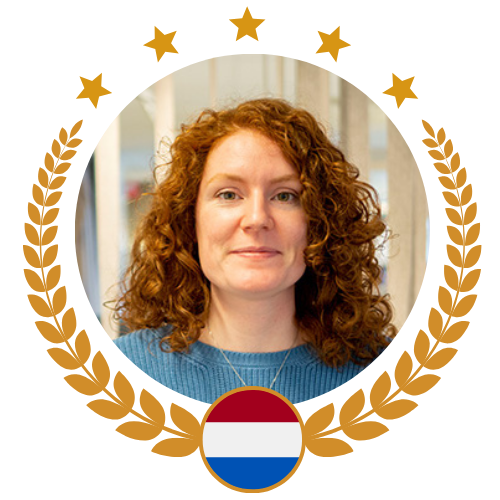
Helen Kearney
Maastricht University
MERLN Institute
Encapsulating organoids within soft hydrogels has emerged as a transformative approach in the field of biomedical research and tissue engineering. This technique offers a biomimetic environment that closely resembles the native extracellular matrix, providing essential mechanical cues that promote organoid growth, differentiation, and functionality. Plant-based biomaterial, recognized for their biocompatibility, non-toxicity, serve as a sustainable alternative to other animal-derived biomaterials for organoid encapsulation.
In our study, we developed a bioink comprised of a functionalized plant-based biomaterial that can be rapidly photocrosslinked under ultra-violet (UV) light in the presence of a photoinitiator. The formulation yielded a hydrogel with tunable stiffness crucial for mimicking native tissue mechanics. We optimized bioprinting parameters to create a construct with stiffness comparable to native kidney tissue, within which kidney organoids were bioprinted and characterized during their final stages of differentiation. This characterization included detailed analysis of structural features and protein expression profiles.
Our primary objective is to overcome significant challenges in RNA extraction from the hydrogel-encapsulated organoids. The high viscosity and high polysaccharide composition of the hydrogels used present obstacles for efficient cell lysis and RNA release, while residual contamination can compromise RNA purity, affecting downstream processing and analysis. We aim to compare different RNA extraction methods to evaluate which it the best process to preserve RNA integrity and maximize yield. Furthermore, we address complexities in measuring lactate dehydrogenase (LDH) and Adenosine triphosphate (ATP) release in 3D encapsulated cultures. Diffusion barriers and nutrient gradients within the hydrogel matrix complicate accurate LDH/ATP level detection as indicators of cytotoxicity and cell viability.
Our goal is to enhance result assessment using commercially available cytotoxicity kits through the establishment of reliable controls. In conclusion, our research leverages advancements in biomaterials and bioprinting technologies to enhance the utility of hydrogels in organoid research. By addressing key challenges related to RNA extraction and LDH/ATP measurement, we contribute to the development of robust methodologies for studying organoid behavior and function in-vitro.
This project has received funding from the European Union’s Horizon 2020 research and innovation programme under the Marie Skłodowska-Curie grant agreement no. 860715, and European Union’s FET Open program under grant agreement no. 964452.

Finalists
Elevating Your Path to Discovery
Hey, bright Benelux minds and innovators in the lab! Are you ready to take your groundbreaking research to the next level? Dive into the Rising Research Awards, designed exclusively for young scientists like you who are ready to shake up the world of life sciences.
❔ Why Join? Because your innovative work deserves the spotlight! Not only could you snag awesome rewards to fuel your research adventures, but you'll also get a chance to flaunt your findings on a grand stage. Imagine having access to cutting-edge tools and tech from Promega, boosting your project from "wow" to "WOW"!
🚀 Take the Leap: Submit your application and let's propel your research into the limelight. Because science isn't just about discovering the unknown – it's about shouting those discoveries from the rooftops!
Ready to be recognized as the next big thing in science? Let your journey begin with the Rising Research Awards. Apply now and show the world what you've got!
🏁 Benelux Contest: Promega Benelux will select one winner from among the Benelux entries.
This is a global contest, see the participating countries and
For more information, visit the Rising Researchers Award home page.

What's in It for You?
🌈 Spotlight on Your Science: Shine bright in the scientific community.
🔬 Tech Treasure Trove: Discover Promega's latest innovations to power up your research.
🤝 Networking Opportunities: Connect with fellow geniuses and industry gurus.
💡 Boost Your Brainpower: Workshops and webinars to level up your skills.
Timeline
 Registration Is Open
April 1st - June 30th, 2024
Applications In Review
July 1st - July 30th, 2024
 Finalists Notified
July 31st, 2024
Finalists Announced & Voting Starts
October 15th, 2024
Voting Closes
November 15th, 2024
Recipients Announced
December 6th, 2024
Application Process
 Register Yourself Today!
Sign up today and work on your abstract later. Register here
Submit Your Abstract
Your basic information and an abstract of your research project
(500 words or less) Submit your abstract here
 Finalists Selected
Top Finalists from each participating Promega Branch
(Selected by Promega Representatives)
 Voting Opens
Voters must have an academic domain e-mail address
(Finalists can promote their videos to collect votes)
 Recipients Announced
The finalist with the most votes from each Promega Region wins
(Grand prize trip to Madison, USA to meet our R&D)

Awards
1st Place
Grand prize wins a trip to Promega headquarters in Madison, WI USA to meet our R&D team and present your projects.
From the entries submitted by Rising Researchers from the Benelux, we'll choose 5 finalists to move on to the final voting stage.
Public votes are cast between October 10th and November 15th, 2024 for each nominee. The candidate with the most votes wins.
2nd Place
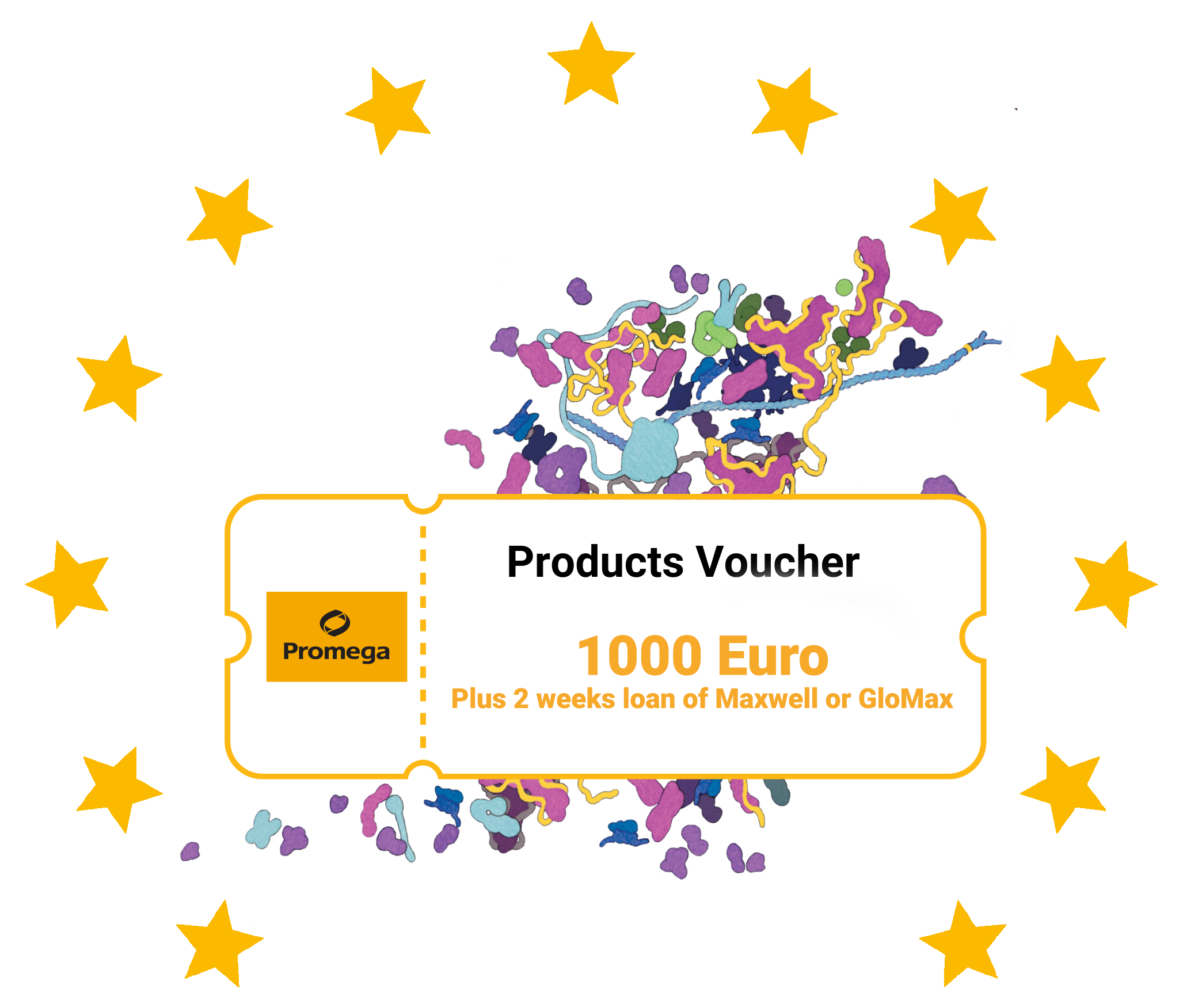
1000 Euro in free Promega products. Plus the loan of a Maxwell Instrument or Glomax Luminometer for 2 weeks free of charge.
3rd Place
Eligible individuals are not required to buy Promega products or pay any fees to participate. Employees of Promega Corporation, and its subsidiaries, and authorized distributors, and members of the immediate families of such employees, are not eligible.
The Promega Rising Researchers Award is not available in all geographic regions. Applicants should please check the Promega website, or with their Promega representative or authorized Promega distributor, for availability in their area. Void where prohibited by law. To enter the content for the Promega Benelux branch, you have to live in one of the Benelux countries (that is: Belgium, Luxembourg, or the Netherlands)
The Promega Rising Researchers Award is available to individuals who are at least 18 years old and are a researcher or scientist that is enrolled in a life science PhD program as of the date their application for the Award is submitted. Examples of eligible life science research areas include, but are not limited to: biology, molecular biology, biotechnology, biochemistry, biomedical science, genetics, microbiology, pharmacology, neuroscience, ecology, immunology, and other similar research areas.
Submit Your Registration Form
Tell us a little about yourself
No submissions will be accepted after June, 30th, 2024. Each Applicant will be notified if they were selected a Finalist no later than July 31st, 2024. Each Finalist will be notified if they were voted a Recipient no later than December 6th, 2024.
The following illustrates the information the applicant will be asked when submitting entry to the award program.
- Contact Information: First name, last name, birth date, email address, telephone, job/role, institute, street address, city, state/province (as applicable), postal code, country.
Complete the Application Form
Share your abstract and project impact
Please consider that some organization’s internal policy may not allow the applicant to receive incentives or that employer’s permission may need to be requested before participating in the contest.
Please be mindful that this abstract will be shared publicly through the Promega website and consider the level of information allowed by your organization.
Finalists Selected
Top 5 Finalists from Promega Benelux
(Selected by a Promega selected jury)
Finalists will be selected, through a vetting process involving Promega Branch employees (the “Selection Committee”) based on information submitted in the application form. Each recipient will be notified by e-mail at the sole discretion of Promega, no later than Wednesday, July 31st, 2024. In the event a recipient cannot receive their prize for any reason, the prize shall be awarded to an alternate winner as determined by the Promega Selection Committee.
Voting Opens
Voters must have an academic domain e-mail address
(Finalists can promote their videos to collect votes)
All of the Finalists selected by the Promega Selection Comittee will be asked to submit additional information such as a profile picture and answers to questions about their scientific background and interests. Finalists will also be asked to prepare a video up to 3 minutes long detailing their project.
This information will be made available in Promega’s website, along with a form that will allow other academic researchers to vote for one Finalist of their choice. The singular criteria for one to be able to vote will be to provide one's own academic email address, that is, an email with an academic domain, such as @harvard.edu, @stanford.edu, etc. Votes will be counted according to the voters’ country of residence, and one Finalist with the most votes per each participating Promega Branch (and the countries which they serve) will be deemed the Recipient for that Promega Branch. Therefore, the amount of Recipients corresponds to the amount of participating Promega Branches (and not the amount of participating countries).
Each Recipient will be notified by e-mail at the sole discretion of Promega, no later than Friday, December 6th, 2024.
Recipients Announced
The finalist with the most votes from each Promega Branch wins
(Grand prize trip to Madison, WI to meet our R&D)
The cost of the USA ESTA visa will be reimbursed by Promega Benelux.
Additional expenses incurred by individual choice of each Recipient, such as activities and purchases outside of the visit schedule, will not be covered by Promega.
Additional awards for other Finalists are at the discretion of those Finalists’ local Promega Branch.
By accepting the Rising Researchers Award, the applicant will be asked to share information or data collected for marketing or commercial purposes. Specifically, winners agree to:
- Share stories from their research with Promega in the months following them receiving the award.
- Support promotional activities at Promega’s request for 12 months following accepting the award, which could include, but is not limited to, interviews, webinar presentations, website story features, videos, photoshoots, blogging, data sharing, and/or presenting at conferences or seminars.
This content will be shared on the Promega website (www.promega.com), the Promega blog (www.promegaconnections.com) and Promega social media accounts including Facebook, Instagram, LinkedIn and Twitter.
Recipients must acknowledge Promega in scientific publication(s) authored by the award recipient related to the research performed and supported by the award. A detailed consent form will be provided that allows Applicants to choose which information they are willing to share and though which channels.
In case of a dispute regarding the identity of the person submitting an online entry, the entry will be deemed to be submitted by the person in whose name the e-mail account is registered. The recipient may be required to provide evidence that they are the authorized account holder of the e-mail address associated with the selected entry. Return of any award notification as undeliverable will result in forfeiture of the prize.
Entry information shall be the property of Promega. No prize transfer or cash redemption will be permitted. No prize substitution will be permitted, except by the sole discretion of Promega, in which case a prize of comparable or greater value may be awarded.
Promega reserves the right to substitute any award of equal or greater value or to cancel, suspend, and/or modify the award at its sole discretion.
By participating, applicants agree to abide by and be bound by the rules and decisions of Promega which shall be final in all respects relating to this Rising Researchers Award, including without limitation the interpretation of this rule.
Participants agree to release, discharge and hold harmless Promega, and their subsidiaries, affiliates, officers, directors, agents, representatives, and respective employees from any and all claims, charges, injuries, liability, losses and/or damages of any kind resulting from or arising out of participation in the Rising Researchers Award and/or the acceptance, use, misuse or possession of any products received through the Rising Researchers Award. Recipients of this award will be ineligible for future Rising Researchers Awards.